
How Is AI Assisted Coding Changing The Role Of Software Developers In 2026
A detailed exploration of how AI assisted coding is revolutionizing developer roles, shifting responsibilities, and enhancing productivity in 2026.
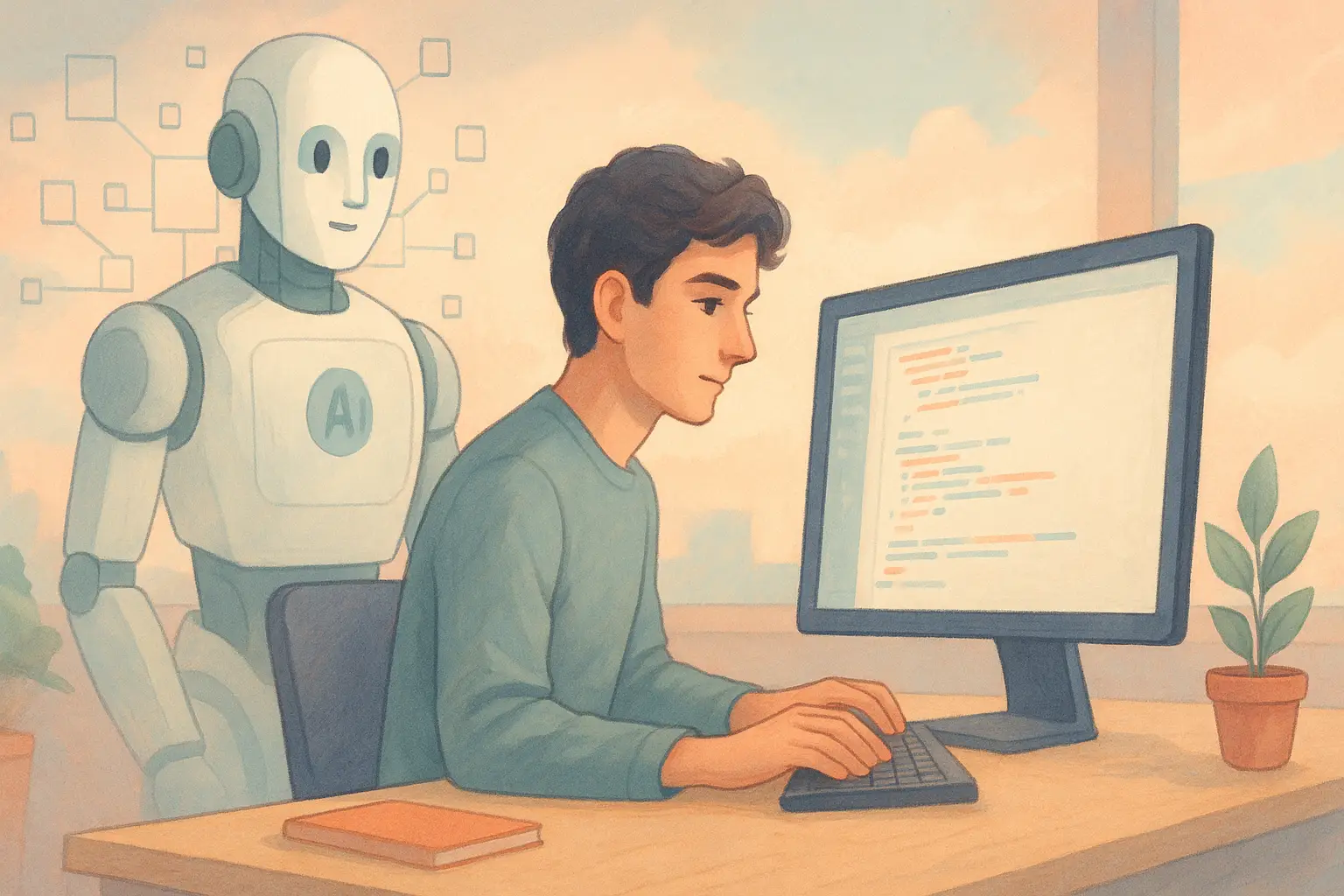
Table of Contents
- Introduction
- A New Era: From Manual Coding to AI Assisted Processes
- The Changing Role of Software Developers
- How AI Assisted Coding Works
- Boosting Productivity with Intelligent Tools
- Collaboration: AI as a Teammate
- Challenges and Trade-Offs
- Continuous Upskilling and Professional Development
- Real-World Examples and Case Studies
- Future Outlook: The Symbiosis of AI and Human Ingenuity
- Final Thoughts
- Frequently Asked Questions (FAQs)
Introduction
The world of software development is evolving rapidly, and 2026 is proving to be a transformative year. AI assisted coding has shifted from a futuristic concept to an everyday reality that is reshaping the way developers work, collaborate, and innovate. Once responsible for writing out every line of code, today's developers are now leveraging advanced, intelligent systems as trusted teammates, allowing them to focus on higher-level programming challenges.
In this article, we will explore how AI assisted coding is altering the role of software developers, discuss the mechanisms behind these advanced tools, and address both the benefits and challenges that come with this transformation. Whether you are a seasoned software engineer or a newcomer in the tech world, the impact of AI on coding practices is something you won’t want to miss.
A New Era: From Manual Coding to AI Assisted Processes
For decades, the process of coding was a labor-intensive, manually driven task. Developers wrote every function, tested every bug, and repeatedly debugged their code. Over time, the field began to adopt automation tools to help with repetitive tasks. However, AI assisted coding marks a step change from those early tools.
The Shift in the Coding Paradigm
AI assisted coding platforms, powered by machine learning and natural language processing, automatically generate code, spot bugs, and even optimize performance in real time. This new technology takes repetitive tedium off a developer’s plate, which is a notable shift from conventional programming methods.
Take, for instance, a scenario where a developer has to implement a standard user authentication module. Where traditional coding involves manually writing the code block after block, AI enabled tools can now provide instant templates, suggest secure coding practices, and even perform real-time modifications as needed. The net result? Faster release cycles, fewer bugs, and more room for innovation.
A Brief History: From IDE Plugins to Autonomous Agents
- Early plugins provided snippets, syntax highlighting, and code completion.
- Modern tools now integrate deep neural network models that analyze vast code repositories.
- Some platforms even autonomously suggest code structures based on previous project data.
This evolution has transitioned AI tools from passive amplifiers of coding skills to active collaborators that understand context and anticipate developer needs.
The Changing Role of Software Developers
With AI playing a central role in software engineering, the responsibilities of a developer extend well beyond writing code. Here’s an in-depth look at these emerging responsibilities:
Designers and Strategists
Developers are transforming into designers and strategists, focusing on system architecture, performance tuning, and long-term project vision. Instead of spending countless hours on mundane tasks, developers now:
- Conceptualize system blueprints.
- Oversee code quality produced by AI tools.
- Integrate various microservices and APIs that push the envelope of what’s possible.
Quality Coaches
The rise of AI assisted coding has spawned a new role: that of the quality coach. Instead of directly coding every function, developers are tasked with reviewing the AI-generated code. They play a critical role in ensuring that the final output adheres to best practices, is bug-free, and meets strict security guidelines.
- They evaluate the logic behind AI-generated code.
- They enforce coding standards and ensure consistency across the board.
- They provide vital feedback to improve AI models over time.
Creativity and Problem Solving
Perhaps the most exciting aspect of this evolution is the opportunity to focus on creative problem solving. With the mechanical work largely managed by AI, developers can spend more time:
- Brainstorming innovative features.
- Creating unique user experiences.
- Tackling problems that require nuanced judgment and abstract thinking.
This shift allows for an environment rich in creativity, where technology serves as a catalyst for setting new standards rather than just a tool for automation.
A Day in the Life of the Developer in 2026
Imagine starting your day reviewing a summary list of tasks generated by your AI assistant. It might include:
- Code modules that require minor adjustments.
- Bug reports flagged by the system with suggestions for fixes.
- Upcoming tasks that need further input for optimization.
Throughout the day, the developer switches between overseeing AI-generated code, testing functions, and brainstorming system improvements. Table 1 below provides an illustrative comparison of tasks from 2020 versus tasks in 2026:
Table 1: Developer Task Comparison
| Task Category | 2020 Approach | 2026 Approach |
|---|---|---|
| Writing Code | Manual, line-by-line | AI-generated template with human edit |
| Debugging | Manual debugging | AI auto-debug with human validation |
| Planning & Design | Separate meetings | Integrated with AI insights |
| Research and Testing | Time consuming search | Instant suggestions from AI agents |
| Code Quality Assurance | Manual review | High-level review and oversight |
The table vividly illustrates how tasks have evolved with the integration of AI, emphasizing a shift from labor-intensive coding to higher-level strategic involvement.
How AI Assisted Coding Works
In order to appreciate the transformation, it is essential to understand how AI assisted coding platforms work. Here’s a look behind the curtain at the mechanics that drive these systems.
Machine Learning and Neural Networks
AI assisted coding systems are powered by advanced machine learning models. These models are trained on vast volumes of code, datasets, and software projects honed over many years. They learn to recognize coding patterns, anticipate errors, and suggest improvements based on historical data.
- Neural network models process syntax, logic, and security parameters.
- They generate code snippets that are often indistinguishable from human-written code.
- Continuous learning updates ensure that the tools stay current with new programming trends.
Natural Language Processing (NLP)
NLP allows developers to communicate with the AI in simple, natural language. Instead of writing detailed specifications, a developer might simply note, “I need a responsive login page with OAuth 2.0 integration.” The AI then interprets this request, breaks it down into logical components, and produces a functional draft that the developer can refine.
The Role of Reinforcement Learning
Some systems use reinforcement learning to guide and improve the quality of the AI generated code. After each code generation cycle, feedback loops enable the AI to learn what worked well and what needs improvement. This iterative process ensures that the software becomes more refined over time.
Integration with Existing Tools
Modern AI assisted coding platforms integrate seamlessly into popular integrated development environments (IDEs) like Visual Studio Code, IntelliJ IDEA, and JetBrains. This integration allows for:
- Real-time suggestions without leaving the coding environment.
- Automatic error checking and syntax corrections.
- Enhanced collaboration with version control systems such as Git.
All these technologies work in tandem to offer a robust, reliable system that significantly augments the capabilities of software developers.
Boosting Productivity with Intelligent Tools
The productivity leap enabled by AI is one of the most compelling benefits for modern developers. Here are some of the key ways these tools supercharge productivity.
Automation of Repetitive Tasks
One of the main advantages of AI assisted coding is the elimination of redundant, repetitive coding tasks. These systems are designed to handle tedious chores like:
- Creating boilerplate code.
- Writing standard functions.
- Repetitive refactoring.
By automating these tasks, developers can divert their time and energy to complex, innovative problems that require human nuance and creativity.
Rapid Prototyping
In the fast-paced world of technology, rapid iteration is key. AI tools can generate working prototypes within minutes. In a startup setting, this means getting a clickable, testable product almost immediately, allowing for faster market validation.
For instance, consider a team tasked with drafting a new feature for an e-commerce platform. An AI assistant could create a preliminary version with basic front-end and back-end components. The developers then refine the details, reducing the overall development cycle substantially.
Enhancing Code Quality
The quality of the code is paramount in software development, and AI is a powerful tool in maintaining high standards. AI systems constantly scan for bugs, enforce code consistency, and flag security vulnerabilities. This constant oversight helps in:
- Reducing long-term bug accumulation.
- Ensuring that best practices are consistently implemented.
- Lowering the cost and time spent on debugging and maintenance.
Resource Allocation and Cost Savings
Smaller teams gain visibility and productivity through AI assisted coding, meaning that even with fewer developers, businesses can achieve more. The efficient transformation from idea to deployable code enables organizations to cut costs while maintaining quality.
In summary, automation isn’t just about speed. It’s about reallocating human resources to tasks that require innovative thinking, thereby unlocking unprecedented levels of productivity.
Collaboration: AI as a Teammate
One of the most intriguing aspects of AI assisted coding is the evolving nature of collaboration. The computer is no longer a mere tool; it’s increasingly viewed as a colleague.
The AI Co-Developer Concept
In today's fast-evolving work environment, many developers refer to AI tools as their "co-developers" or junior engineers. Instead of working in isolation, the developer-AI collaboration creates a dynamic workflow:
- The AI handles the routine, generating initial versions of code.
- The developer refines, critiques, and improves upon the AI's work.
- Feedback loops ensure that the AI learns from each interaction, leading to better suggestions in future projects.
This model of co-working results in a workflow that is both inspiring and efficient. It makes for a more engaging development process, as the repetitive tasks are taken off the table, and creative decisions are made by human experts.
Facilitating Team Communication
AI tools are not only enhancing individual productivity; they’re also streamlining team communication. Integrated project management systems now work with AI assistants that help coordinate tasks, track progress, and even mediate conflicts in code style choices across teams. This can be especially useful in large-scale projects, where maintaining communication across multiple time zones and dispersed teams is a challenge.
An Example of AI Collaboration in Action
Consider a scenario where a multinational team is building a cloud-based platform. The project involves several modules, each built by teams in different parts of the world. An AI assistant, integrated into the version control system, suggests standard coding patterns and even translates documentation into multiple languages. This harmonization means each team can work without miscommunication, ensuring consistency in style, data handling, and error management.
Challenges and Trade-Offs
While AI assisted coding has enormous potential, it is not without its challenges and trade-offs. It’s important to consider both the limitations and the risks associated with integrating AI deeply into the development lifecycle.
Dependence on Technology
One of the primary concerns is the risk of over-dependence on automated systems. As developers rely more on AI to handle routine tasks, there is a risk they might lose some of their foundational skills. Balancing automation with hands-on coding is essential:
- Continuous training helps maintain skill levels.
- Regular manual code reviews ensure understanding of underlying principles.
- Developer-led testing confirms that AI suggestions meet high-quality standards.
Ethical Considerations
The use of AI tools leads to questions about responsibility. For example:
- Who is accountable for a bug introduced by an AI generated code snippet?
- How do we ensure that AI systems are free of inherent biases present in training data?
These ethical questions require thorough documentation, clear usage guidelines, and a collaborative effort between developers and AI researchers to build robust frameworks that ensure fairness and accountability.
Security and Compliance Issues
AI systems also present new security challenges. Codes generated by AI tools have to be rigorously tested to verify that they do not introduce vulnerabilities or violate compliance standards. Failure to do so might expose organizations to potential data breaches or regulatory issues.
Furthermore, when sensitive data is used to train these AI models, companies must remain vigilant about data privacy regulations. It is essential for organizations to:
- Regularly audit AI generated code.
- Implement stringent access controls.
- Ensure data used in training does not contain personally identifiable information (PII).
Trade-Offs Between Speed and Understanding
A significant trade-off is between speed and deep understanding. AI powered solutions can dramatically speed up development cycles, but they might obscure the intricacies of the underlying code. Developers sometimes need to dig into code they did not write to understand its functioning:
- This may lead to a gap in deep technical knowledge over time.
- Organizations must encourage ongoing learning and ensure that developers maintain a core understanding of system architecture and design even as they delegate routine tasks to AI.
A balanced approach is necessary—developers should view AI as a partner that speeds up routine work, while they continue refining their craft in complex problem solving and design.
Continuous Upskilling and Professional Development
As AI tools rapidly advance, the role of continued professional development and upskilling becomes more significant. Traditional coding skills are now complemented by new skills that allow developers to interact optimally with powerful AI systems.
Embracing the Change
In today’s fast-evolving tech landscape, continuous learning is paramount. Software developers must:
- Keep abreast of emerging AI trends and how they impact daily workflows.
- Attend workshops and seminars on prompt engineering and effective AI interaction.
- Collaborate with cross-disciplinary teams to understand how AI insights can benefit overall system design.
Essential Skills for 2026
Based on the evolving role of developers, here are some skills that are becoming indispensable:
- Prompt Engineering: Knowing how to frame requests to get useful, precise code.
- Code Review Mastery: Shaping the final output by combining AI generated drafts with deep quality assurance.
- Integration Techniques: Using smart IDE extensions and AI debugging tools.
- Security and Performance Oversight: Ensuring all AI generated code adheres to robust security standards.
A developer who actively upgrades these skills not only stays relevant but becomes a thought-leader in creating efficient, sustainable coding practices.
Learning on the Job
In many organizations, continuous learning is integrated into the workflow. Companies have begun offering on-demand training and AI coding labs where teams can experiment, share experiences, and refine their skills together. This collaborative learning environment bridges the gap between traditional coding techniques and the dynamic environment that AI offers.
Real-World Examples and Case Studies
To further understand the impact of AI assisted coding, let us look at some real-world examples and case studies that highlight its transformative potential.
Case Study 1: Startup Transformation
A small startup working on a mobile payment solution decided to integrate an AI assisted coding tool. The initial phase involved the AI generating boilerplate code for fundamental functions like transaction handling and security verification network protocols. The benefits were striking:
- Implementation time dropped by nearly 40%.
- Quality checks revealed fewer bugs during integration testing.
- Developers could focus on developing unique features such as predictive fraud alert systems and customized user dashboards.
This case underscores how AI assisted coding can level the playing field for startups competing against larger enterprises by streamlining code generation and reducing operational costs.
Case Study 2: Enterprise-Level Integration
Take a multinational corporation that manages a large-scale cloud infrastructure. Their development process involved managing complex microservices architecture and deploying updates across multiple regions. The corporation integrated an AI tool that:
- Automated routine testing across services.
- Provided on-the-fly code corrections.
- Offered adaptive architecture suggestions based on performance monitoring.
The result was a major improvement in software reliability and a reduction in production downtime. Furthermore, the AI was trained continuously using production data, which led to ongoing improvements and reduced overall operational risks.
Case Study 3: Open Source Impact
An open source project dedicated to creating a robust content management system also integrated AI assisted coding. Contributors found that automated code reviews and error detection drastically reduced the friction in merging new features. The community enjoyed:
- More consistent code standards.
- Faster resolution of pull requests.
- An overall more inclusive development process, inviting contributions from both seasoned developers and newcomers.
Table 2 below sums up these case studies:
Table 2: Summary of AI Assisted Coding Case Studies
| Context | Key Improvements | Measured Outcome |
|---|---|---|
| Startup mobile payment | Faster coding & reduced bugs | 40% drop in implementation time |
| Enterprise cloud infra | Real-time testing & adaptive suggestions | Lower downtime & improved reliability |
| Open source CMS project | Consistent reviews & faster merges | Increased contributor satisfaction |
These examples illustrate that AI assisted coding is not just a concept—it is a powerful strategy making a real difference across diverse domains.
Future Outlook: The Symbiosis of AI and Human Ingenuity
Looking ahead, the role of software developers is set to evolve even further as AI technology continues to advance. The future paints a promising picture where human creativity and AI efficiency coalesce to produce unparalleled outcomes.
Enriched Creativity and Innovation
AI will continue to handle routine processes, freeing developers to push boundaries in creativity and innovation. With less time spent on memorizing syntax or debugging trivial errors, developers will have the bandwidth to:
- Experiment with novel architectural frameworks.
- Create dynamic solutions to complex global challenges.
- Innovate in areas like machine learning, augmented reality, and blockchain integration.
This digital renaissance is likely to spur innovations that we cannot even imagine today. The generation of ideas will be more holistic, drawing inspiration both from practical experience and advanced AI insights.
The Evolution of Collaboration Models
The evolution of AI assisted coding is likely to give rise to new collaborative models. Teams might adopt practices where AI systems are fully embedded in daily stand-ups, sprint planning, and even in code accountability reviews. We might see:
- AI systems that act as dedicated project managers.
- Automated risk analysis integrated with version control reviews.
- Real-time learning platforms that not only write code but also suggest best practice improvements on the fly.
Knowledge sharing between teams and AI systems will eventually lead to a scenario where every software product is the result of a collective intelligence—melding human intuition, technological expertise, and machine precision.
The Growing Importance of Ethical Standards
As developers and organizations grow more reliant on AI assisted tools, ethical standards and industry-wide guidelines will become critical. Future frameworks may include guidelines for:
- Transparency in AI decision-making.
- Accountability for AI generated code.
- Regular audits and performance metrics to ensure that AI integration does not compromise user privacy or security.
Global industry bodies will likely step in to shape regulations that balance innovation with ethical responsibility.
Final Thoughts
AI assisted coding is changing the landscape of software development in profound ways. The transformation is not about replacing developers but rather about empowering them to contribute more strategically and creatively. Modern software development in 2026 is characterized by rapid prototyping, enhanced code quality, and a dynamic interactive relationship between human ingenuity and machine efficiency.
As we continue to witness this transformation, the role of the developer evolves into that of a visionary, a quality coach, and an innovator who guides AI systems towards producing optimal outcomes. The partnership between AI agents and software developers is redefining responsibilities and paving the way for a future where technology and creativity reside in perfect harmony.
In this evolving ecosystem, developers are encouraged to continuously refine their skills, adapt to new tools, and embrace an era where code is not just written, but co-created. This blending of machine speed and human insight is bound to unlock new possibilities and drive the tech industry into a future marked by efficiency, creativity, and brilliant innovation.
In this era of digital transformation, the software development landscape is being redrawn by the revolutionary capabilities of AI assisted coding. As we prepare for the future, one thing remains clear: the symbiosis of human creativity and AI-driven automation is set to redefine the way we approach technology—enhancing productivity, ensuring quality, and creating room for a whole new wave of innovation. Whether you’re a lone coder or part of a large multinational team, the future is undeniably collaborative, intelligent, and delightfully challenging.
FAQ
Frequently Asked Questions
Common questions about this article
Related Articles
You Might Also Like
Explore more articles on similar topics
How to Choose the Right AI Workflow Tools Like Zapier, Make, or n8n
A comprehensive guide to selecting the best AI workflow tool among Zapier, Make, and n8n, covering integrations, pricing, ease of use, AI features, and scalability.